What Is a Dumb Supper? Host a Silent Supper to Honor Your Beloved Dead This Samhain
Share
A table is set. Candles flicker beside photographs and familiar objects. A favorite dish is served, and one place remains open for someone who is loved, remembered, and no longer physically present. Once the meal begins, no one speaks.
This is a dumb supper—more commonly called a silent supper today—a ritual meal held in quiet remembrance of the dead. For many modern witches and Pagans, it has become a deeply meaningful way to observe Samhain, when memory, ancestry, endings, and the mysteries of the spirit world feel especially close.
The word dumb is being used in its older sense of “unable or choosing not to speak.” It does not mean foolish or unintelligent. Because the expression can sound dated or hurtful now, many people prefer the name silent supper. Either name may be used for the practice described here.
You do not need to be an experienced witch, a medium, or part of a formal tradition to hold one. You need only a meal, a quiet place, a clear intention, and someone you wish to remember.
Create a Place of Remembrance
Set your table with a photograph, written name, candle, glass of water, and a favorite food of the person you are honoring. Add candle magic, offerings, or meaningful objects to create a personal Samhain observance for your beloved dead.
A silent supper can be as simple or elaborate as your heart requires.
What Is a Dumb Supper?
A dumb supper is a ritual meal prepared and eaten in silence. In the modern Samhain observance, one or more places are set for deceased loved ones, ancestors, friends, teachers, chosen family, or beloved animal companions. Food and drink are offered as acts of hospitality and remembrance.
The purpose is not necessarily to summon a visible spirit or demand a supernatural sign. It is to make room for a relationship that death has changed but not erased. Silence turns an ordinary dinner into an intentional space where memories can surface, grief can be acknowledged, and love can be expressed without needing to explain itself.
Some people understand the invited dead as literally present. Others treat the empty chair as a symbol of memory and continuing connection. You may understand the ritual spiritually, psychologically, poetically, or in a way that combines all three.
Where Did the Dumb Supper Tradition Come From?
The history is more complicated—and more interesting—than the idea of one unchanged ancient Samhain ritual.
Gaelic Samhain and later Halloween folklore included customs of leaving food for spirits, welcoming the returning dead, and reserving a place near the table or fire for deceased family members. Hospitality offered to the unseen fits naturally within a season associated with thresholds, winter’s approach, and the closeness of the Otherworld.
Historically, however, the specific phrase dumb supper was also used for a different kind of folk ritual: a silent meal performed for divination. In accounts from Britain and the United States, young women prepared and ate a meal in silence—sometimes setting the table backward or serving dessert first—in hopes of seeing the person they would marry. These eerie Halloween rites could be serious acts of folk magic, thrilling party games, or both.
The silent ancestor supper practiced by many witches today brings several related traditions together: seasonal hospitality for the dead, food offerings, memorial meals, Samhain observance, and the ritual power of silence. It is best understood as a living practice that has developed over time rather than a ceremony that every ancient Celt performed in exactly the same way.
If you would like to learn more about the season itself, read What Is Samhain? Meaning, Traditions & a Simple Samhain Ritual.
Why Is a Dumb Supper Eaten in Silence?
Silence changes the quality of attention. Without conversation, phones, music, or the ordinary clatter of social dining, small things become vivid: candlelight, fragrance, flavor, the weight of an empty chair, and the memories attached to a familiar recipe.
The silence can serve several purposes:
- Remembrance: It gives each guest private space to recall the dead.
- Listening: It creates room for intuition, emotion, and subtle impressions without forcing a message.
- Equality: No one person controls the memory of the person being honored.
- Reverence: The absence of casual conversation marks the meal as sacred time.
- Presence: It asks the living to slow down and participate fully in an act of hospitality.
Silence does not mean suppressing emotion. Tears, laughter, or a deep breath may arise. The purpose is not perfect performance. It is loving attention.
When Should You Hold a Silent Supper?
Many people hold a silent supper on the evening of October 31 as part of Samhain. Others choose November 1, the nearest weekend, or another evening during the Samhain season when everyone can gather without rushing.
You may also hold one on an ancestor’s birthday, the anniversary of a death, during the winter holidays, or whenever remembrance feels necessary. Samhain provides a powerful seasonal setting, but love does not follow only one calendar.
What Do You Serve at a Dumb Supper?
There is no required menu. The most meaningful food is often something connected to the person being remembered:
- Their favorite meal, dessert, snack, or drink
- A family recipe passed through generations
- Food from their home, heritage, or community
- Seasonal apples, squash, bread, grains, nuts, or root vegetables
- A simple meal you can prepare calmly and eat safely in low light
You might cook an entire dinner associated with one person or place small portions of several favorite foods on a shared remembrance plate. If you never knew your ancestors’ preferences, serve nourishing food from your own table with a sincere welcome.
Food allergies, dietary needs, recovery, and accessibility always matter more than historical atmosphere. The magic is in the care, not in following a rigid menu.
Do You Have to Serve the Meal Backward?
No. Backward table settings, reversed actions, and dessert served first belong to some historical divination versions of the dumb supper. They are not required for a modern memorial meal.
You may include a reversed course if you enjoy the folklore, but do not let theatrical rules distract from your purpose. A sincere bowl of soup eaten in quiet remembrance can be more powerful than an elaborate dinner performed with anxiety.
How to Host a Dumb Supper for Samhain
1. Decide Whom You Are Honoring
You may dedicate the meal to one person, several loved ones, your known ancestors, your chosen family, teachers and mentors, community ancestors, or beloved pets. “The beloved dead” does not have to mean blood relatives. Honor relationships that were loving, protective, formative, or genuinely meaningful to you.
You are never required to invite an ancestor who caused harm. Death does not erase the need for boundaries.
If others will attend, tell them in advance what the supper involves. Give everyone the choice to participate, bring a photograph, or simply observe. Grief is personal, and no one should be surprised with a memorial ritual at the dinner table.
2. Prepare the Room
Clean the dining area and make it comfortable. Dim lighting can feel atmospheric, but make sure everyone can move and eat safely. Silence phones and remove avoidable distractions.
If cleansing is part of your practice, use prayer, sound, incense, a spiritual wash, or another method appropriate to your path. State a clear boundary: this gathering is open only to the loving, helpful, and well-intentioned dead being honored.
3. Set a Place for the Dead
Create one special place setting or a small remembrance table nearby. You might include:
- A photograph or written name
- A plate and cup
- A glass or bowl of fresh water
- A candle
- Flowers, autumn leaves, apples, or seasonal offerings
- An heirloom, piece of jewelry, book, recipe card, or meaningful object
- A written note of gratitude
If you prefer not to use a photograph, a name, symbol, or personal object is enough. If no single person is being honored, label the place For the beloved dead who come in love.
The Wishing Ghosts Candle Spell Kit can be used to create a gentle focal point for spirit guides, loving ancestors, and helpful unseen allies. You can also explore the full Halloween, Samhain, and Día de los Muertos Collection for candles and ritual tools suited to remembrance, protection, and spirit work.
4. Prepare and Plate the Meal
Prepare the food with intention. As you cook, remember details: how someone laughed, what they taught you, the music they loved, a phrase they always used, or an ordinary moment that now feels precious.
Serve a small portion at the empty place before serving the living. This is an offering, so it does not need to be a full plate. A spoonful of each dish and a little of the chosen drink are enough.
5. Open the Supper
Before the silence begins, light the candle and speak a short invitation. You may use these words or adapt them:
Beloved dead, known and unknown, whose love and wisdom remain with us: we remember you. We set this place in your honor and offer this meal with gratitude. Only those who come in love, peace, and goodwill are welcome here. Join us in memory and blessing, and depart in peace when this supper is complete.
Say the names of the people being honored if it feels right. Explain that the silence begins when everyone takes their seat or when a bell is rung.
6. Eat in Silence
Take your time. Notice the food, candlelight, and memories that arise. Do not strain to receive a sign or turn every sound into a message. Let the experience be what it is.
If you feel an emotion, image, phrase, scent, or memory that seems important, acknowledge it quietly. You can write it down after the meal. No one has to share what they experienced.
If remaining silent for an entire dinner is impractical, choose a defined period—perhaps the first course, nine minutes, or the time it takes a small candle to burn safely under supervision. Intention matters more than endurance.
7. Break the Silence and Share Memories
When everyone has finished, ring a bell, take a shared breath, or say, “The silence is complete.” You may then invite guests to tell a story, name what they are grateful for, or describe the food they brought and why it mattered.
This sharing is not a test of who felt the strongest presence. A vivid spiritual experience, an ordinary memory, and simple quiet are all valid outcomes.
8. Close the Ritual
Thank the beloved dead and make it clear that the invitation has ended:
Beloved dead, thank you for your love, your lessons, and the ways your lives continue to shape ours. This meal is complete and this gathering is now closed. Go in peace, with our gratitude. May there be love between us and clear boundaries around us.
Extinguish the candle safely. Clear the table with care. Depending on your practice and local conditions, the offering may be composted, buried where lawful and ecologically safe, or wrapped and placed in the trash. Do not leave foods outdoors if they could harm wildlife or attract pests.
Candle Magic and Ritual Tools for a Silent Supper
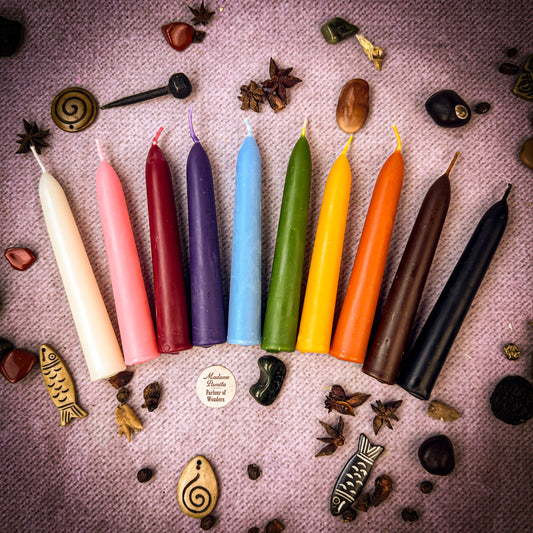
A candle can act as a beacon, memorial, protective boundary, and visible sign that the supper has begun. Choose a candle whose color and symbolism match your intention:
- White: peace, blessing, remembrance, and ancestral connection
- Black: protection, boundaries, banishing, and closure
- Blue: healing, spirit communication, and emotional peace
- Purple: intuition, divination, and ancestral wisdom
- Brown: grounding, family roots, and stability
- Yellow: joyful memories, gratitude, and celebration of a life
Choose the kit that most closely matches the purpose of your supper. Each option below provides a focused candle working that can be performed before the meal, incorporated into the table setting, or completed as a separate Samhain ritual.
Candle Spell Kits for a Silent Supper
- Ancestor & Spirit Communication Candle Spell Kit: Choose this kit when your supper centers on remembrance, closure, mediumship, ancestral connection, or laying the past peacefully to rest. The Graveyard candle can represent a burial place you cannot visit or provide a dedicated focus for honoring someone who has died.
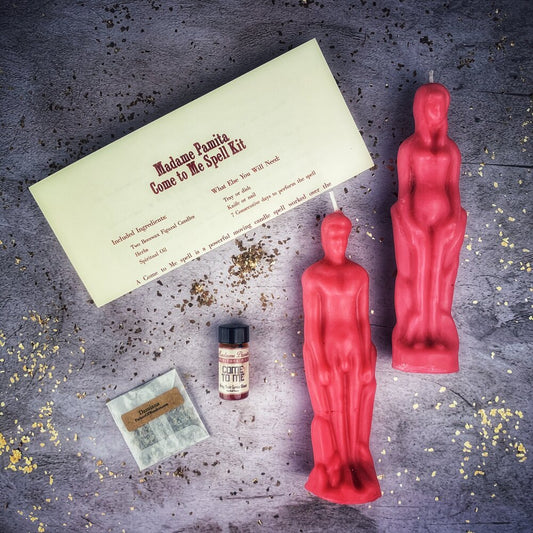
- Wishing Ghosts Candle Spell Kit: Choose this kit for loving spirit guides, helpful ancestors, gentle communication, wishes, blessings, or support from the unseen world. Its paired ghost candles create a tender reminder that loving bonds can continue across a threshold.
- Samhain Candle Spell Kit: Choose the Royal Pumpkin kit for a broader working focused on protection, harvest abundance, spirit communication, blessings, or another magical intention at the threshold of the season.
Each complete kit includes a handcrafted beeswax candle, three ritual herbs selected for the intention, spiritual oil, and instructions for performing the spell.
Find the Right Tools for Your Samhain Table
Explore candles, spell kits, and magical tools for ancestor remembrance, protection, spirit communication, divination, and honoring the beloved dead.
Always place candles on a stable, fire-safe surface. Keep flames well away from photographs, dried leaves, table linens, loose sleeves, flowers, pets, and children, and never leave a burning candle unattended.
Frequently Asked Questions About Dumb Suppers
Is “dumb supper” an offensive term?
In this historical expression, dumb means silent or not speaking. However, the word has also been used as an insult and may feel ableist or uncomfortable today. Silent supper communicates the practice clearly and respectfully. You can explain the historical term once and then use the name that feels best for your gathering.
Is a dumb supper the same as an ofrenda?
No. A silent supper may share elements with memorial traditions found in many cultures, but it should not be presented as interchangeable with a Día de los Muertos ofrenda. Día de los Muertos is a specific Mexican cultural tradition with its own histories, regional practices, symbols, and community meanings. Learn more in What Is Día de los Muertos? Meaning, Ofrendas & Traditions.
Do I have to believe spirits will attend?
No. You may regard the place setting as a literal invitation, a symbolic memorial, or both. The ritual remains meaningful when it creates space for gratitude, grief, family history, and the continuing influence of those who died.
Can I host a silent supper alone?
Yes. A private meal may feel especially intimate and allows you to move at your own pace. Set one place for yourself and one for the person or people you are honoring. If the experience becomes emotionally overwhelming, end the silence, turn on the lights, call someone you trust, and close the ritual.
Can children participate?
Yes, if the observance is appropriate for their age and temperament. Explain that the supper is a way to remember someone with love—not a frightening attempt to produce a ghost. A shorter period of silence followed by stories, photographs, or a favorite dessert may work better for children than a long formal meal.
What if my relationship with the dead was complicated?
You do not owe ritual access to anyone who harmed you. Honor a safe ancestor, a chosen-family member, a pet, a public figure who inspired you, or the unnamed dead who acted with kindness. You may also dedicate the meal to healing your own grief without inviting any particular spirit.
What if nothing happens?
Something has already happened: you prepared a place, spoke a name, offered food, and interrupted forgetting. A silent supper does not fail because you did not see a spirit, receive a message, or feel a dramatic presence. Remembrance is the ritual.
Set a Place for Love That Endures
Samhain reminds us that an ending does not make a life meaningless or a relationship unreal. The dead continue to shape the living through recipes, habits, stories, warnings, jokes, sacrifices, objects, music, and love.
A silent supper makes that truth visible. We prepare what they enjoyed. We leave room at the table. We stop speaking long enough to listen to memory. Then we give thanks, close the door gently, and carry their influence into another season.
Create a Samhain Ritual of Remembrance
Explore handcrafted candles, complete spell kits, and magical tools for ancestor remembrance, protection, spirit communication, divination, and honoring the beloved dead.